
If you know me personally or follow me on social media, you know that Parkinson’s disease has had a personal impact on my life. In 2006, my beloved stepfather, John Yonushonis, was diagnosed with Parkinson’s at the young age of 58. His symptoms were so severe that he was forced to prematurely retire. Potentially the worst insult dealt to him, however, was the fact that he could no longer throw a football. John was an exceptional athlete and played football with legendary coaches like Lou Holtz and Marv Levy.
While his prognosis was only three to five years, John lived another 20 years with the condition, passing peacefully at home in August, 2025. Despite the many difficulties he experienced, John integrated several therapies that helped to improve his quality and potentially quantity of life, including music therapy, boxing, tai chi and mindfulness. I’d like to share the potential benefits of these therapies, which are all available here in the Coachella Valley.
Soon after his diagnosis, John taught himself to play the Native American flute, experiencing many benefits, even in the advanced stages of the disease. Music-based therapies have shown significant improvement in motor symptoms related to Parkinson’s. Several research studies and meta-analyses have shown improvements in walking speed and stride length1 with researchers speculating that music provides a rhythm to support movement and activates neural circuits to support motor control.2
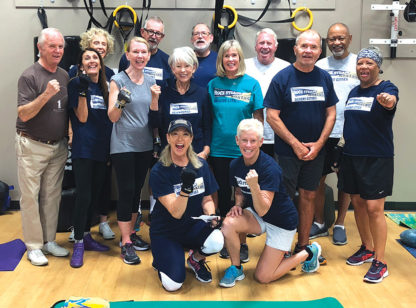
My stepfather also participated in multiple non-contact boxing programs. Boxing is recognized as a therapeutic modality for improving both motor and non-motor symptoms. In 2025, a study of 26 patients with Parkinson’s completed a 12-week community-based non-contact boxing program called Rock Steady Boxing. They compared baseline and final measurements of the Mini Balance Evaluation System Test and found significant improvement in balance.3 In a large survey study of 1,709 individuals completing the Rock Steady Boxing program, they self-reported improved social life (70%), fatigue (63%), fear of falling (62%), depression (60%) and anxiety (59%). The findings suggest a better quality of life compared to non-participants.4 Further studies are pending.
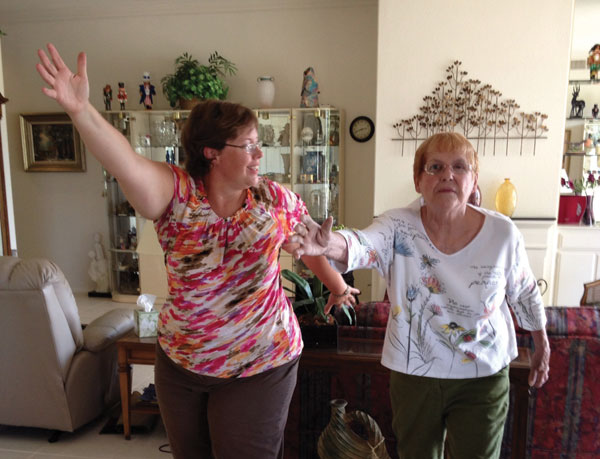
Tai chi, qigong and mindfulness-based yoga practices are also safe, effective and well-researched modalities to improve the quality of life for Parkinson’s patients. A meta-analysis of over 22 research studies found that Tai Chi can improve motor function, balance, depressive symptoms and quality of life.5 Qigong and mindfulness-based yoga practices also show significant benefit. A large clinic trial demonstrated that combined mindfulness-yoga interventions improved anxiety and depressive symptoms when compared to controls and improved quality of life that lasted three months past the interventions.6
I saw firsthand the impact these therapies had on John’s life, and I hope that if your life is impacted by Parkinson’s, you will consider adding them to your routine. A simple way to access these therapies is through a local Parkinson’s support group. My stepfather was a member of the Parkinson’s support groups offered by Alzheimer’s Coachella Valley.
Wherever you are on the journey, I’d suggest connecting to a local Parkinson’s group to learn about music-based therapies, boxing programs like Rock Steady Boxing, Tai Chi, qigong and mindfulness-based yoga.
Edith Jones-Poland, MD, is an integrative primary care physician and lifestyle coach with Circe Healthcare Solutions. She can be reached at (760) 773.4948. www.circecares.com
References: 1) https://pubmed.ncbi.nlm.nih.gov/36673802/; 2) https://pubmed.ncbi.nlm.nih.gov/28663005/ ; 3) https://pubmed.ncbi.nlm.nih.gov/41165167/; 4) https://pubmed.ncbi.nlm.nih.gov/34498995/; 5) https://pubmed.ncbi.nlm.nih.gov/31861456/; 6) https://pubmed.ncbi.nlm.nih.gov/41109323/
















Comments (0)