
Trust the beauty industry to coin another term designed to make desert dwellers tremble. Inflammaging. That glorious intersection of aging and inflammation.
Yes, it’s real and well-documented.1 But no, it’s not a new disaster. It’s just a name for something skin does as it ages. And it’s not a women-only club; men’s skin ages this way too, just without the hormonal cliff of menopause.
The term was coined in 2000 by an immunologist studying older immune systems.1 The basic idea: as we age, the immune system gets less precise and more trigger-happy, sending a low-level stream of inflammatory signals even when nothing is wrong.
It nudges along the enzymes that break down collagen and elastin, interferes with overnight repair and wears at the barrier—the outer layer that holds moisture in and keeps irritants out. None of this announces itself with a rash. It’s quieter, which is why it can feel like it came out of nowhere.
If you’ve ever wondered when your skin got thinner, or why a product that worked for years suddenly stopped, this may be the answer.
Women face a sharp estrogen decline, and estrogen isn’t just a reproductive hormone. In skin, it helps regulate collagen production, barrier strength and inflammatory response. Women can lose roughly 30% of their skin collagen in the first five years after menopause, alongside a thinner barrier and less oil production.
Men get a version of this too; testosterone decline affects skin thickness and oil production, but more gradually, over decades rather than a sharp five-year window.
If you live in the desert, you already have two of the biggest inflammaging amplifiers built into daily life: relentless UV and bone-dry air. UV generates free radicals that feed directly into that inflammatory loop. Low humidity stresses the barrier around the clock. Heat adds to the irritation.
Should we care? A little, and not in the way the marketing wants you to. No need to panic or treat your face like a battlefield. But a few things are worth knowing:
Barrier first. If the barrier is compromised, everything else works harder. Lipids, ceramides and niacinamide are the workhorses here; when the air is drier, use more cream, more mists, more balm.
Antioxidants earn their keep. Vitamin C and antioxidant-rich botanicals intercept free-radical noise before it becomes inflammation.
Strong actives, gentler entry. Retinoids, peptides and acids genuinely support collagen, but layering them onto a strained barrier produces more redness than results. Back off during summer.
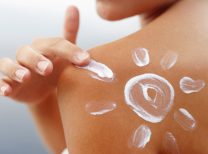
Sun protection isn’t optional. Of all the facts, this one has the most evidence behind it. SPF, shade and a hat do more for inflammaging than any jar on the shelf—and painting indoors beats tennis at noon.
Brook Dougherty of Indio is the co-founder and chief alchemist of JustUs Skincare, formulated for mature and post-menopausal skin. She can be reached at (310) 266.7171 or brook@justusskincare.com. www.justusskincare.com.
Reference: 1) Franceschi C, Bonafè M, Valensin S, et al. (2000). “Inflamm-aging: An evolutionary perspective on immunosenescence.” Annals of the New York Academy of Sciences, 908, 244–254.





















Comments (0)